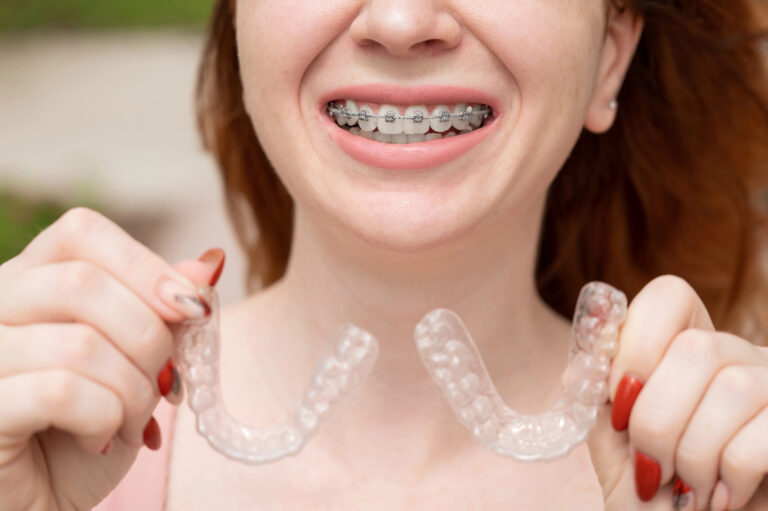
If you are thinking about straightening your teeth, you will quickly run into two main options—traditional braces and Invisalign. Both work. Both are widely used. But they are quite different in how they look, how they feel, and what they are best suited for.
Finding Invisalign near you or exploring braces with a trusted dental team starts with understanding what each option actually does—and which one fits your life, your teeth, and your goals.
This guide breaks it all down in simple, honest language so you can walk into your consultation feeling genuinely prepared.
How Do Traditional Braces Work?
Traditional braces use metal brackets bonded directly to the front of each tooth. A wire runs through the brackets and is tightened at regular intervals—typically every four to eight weeks.
Each adjustment moves the teeth gradually in the planned direction. Over time, the consistent pressure shifts the teeth into the correct position.
Modern braces are much smaller and more comfortable than older versions. Clear ceramic brackets are also available for patients who want a less visible option while still using fixed braces.
Braces stay on the teeth throughout the entire treatment. You cannot remove them.
How Does Invisalign Work?
Invisalign uses a series of custom-made, clear plastic aligner trays. Each tray is slightly different from the last and is worn for about one to two weeks before being swapped for the next one in the series.
Every tray is specifically designed to apply slight pressure and push teeth slowly toward their planned end-position. These almost unnoticeable aligners make them highly popular with patients.
Invisalign in Blackfalds is available for teens and adults dealing with a wide range of alignment concerns. The key difference from braces is that the aligners are removable—you take them out to eat, drink, brush, and floss.
However, for Invisalign to work properly, the aligners must be worn for 20 to 22 hours every day. Wearing them less than that slows progress and can affect results.
Side-by-Side Comparison
Here is a clear breakdown to help you see the key differences at a glance:
| Feature | Traditional Braces | Invisalign |
| Appearance | Visible metal or ceramic brackets | Nearly invisible clear trays |
| Removable | No—fixed throughout treatment | Yes—removed for eating and cleaning |
| Eating restrictions | Yes—hard, sticky foods avoided | No—remove aligners to eat anything |
| Cleaning teeth | More effort is needed around brackets | Easier—normal brushing and flossing |
| Comfort | Some irritation from brackets and wires | Smooth plastic — generally comfortable |
| Treatment time | Typically 18 months to 3 years | Typically, 6 to 18 months for mild to moderate cases |
| Best for | Complex alignment and bite issues | Mild to moderate crowding and spacing |
| Discipline required | No—fixed in place | Yes—it must be worn 20 to 22 hours daily |
| Cost | Generally more affordable | Often slightly higher |
| Follow-up visits | Every 4 to 8 weeks | Every 6 to 10 weeks |
Which One Works Better?
This is the question everyone wants answered—and the honest answer is that it depends entirely on the individual.
Neither option is universally better. Each has situations where it genuinely outperforms the other.
When Braces Are the Better Choice
Traditional braces are the stronger option for more complex orthodontic cases.
Braces may be recommended when:
- The teeth are severely crowded or rotated significantly
- There are complex bite issues—like a significant overbite, underbite, or crossbite
- Multiple teeth need to move in very precise and controlled ways
- The patient is younger and still growing, which affects how treatment is planned
- There are concerns about patient compliance—since braces cannot be removed, consistent treatment is guaranteed
A dental clinic in Blackfalds will always assess the complexity of the case before recommending the most appropriate treatment path.
When Invisalign Is the Better Choice
Invisalign works exceptionally well for the right candidate — and many patients find it genuinely life-changing.
Invisalign may be the better fit when:
- The alignment issues are mild to moderate in complexity
- The patient is an adult or responsible older teen who will wear the aligners consistently
- Appearance during treatment is a priority—for professional or personal reasons
- The patient wants to eat without restrictions during treatment
- Easier daily oral hygiene is important—especially for patients prone to cavities
- The patient prefers fewer in-person adjustments during treatment
Invisalign in Red Deer and the surrounding area is a popular choice among working adults and teens who want effective results without the visibility of metal brackets.
The Compliance Factor — Why It Matters So Much for Invisalign
This is the most important practical difference between the two options.
Braces work whether you think about them or not. They are fixed, so the treatment continues regardless of what you do. The only variable is keeping the teeth clean and attending appointments.
Invisalign is different. The aligners only move teeth when they are in your mouth. Every hour the trays are left out is an hour where no progress is happening.
Patients who remove their aligners for meals and then leave them out for hours at a time — or forget to put them back in after eating — will find their treatment taking significantly longer than planned.
For disciplined patients, Invisalign delivers excellent results. For patients who struggle with consistency, braces may produce a more reliable outcome.
This is a conversation worth having, honestly, with your dental team at a dental clinic near Red Deer before choosing.
What About Teen Patients?
Both options are suitable for teenagers, but each comes with specific considerations.
For teens, braces offer the advantage of no compliance requirement. Treatment moves forward automatically, which is helpful for younger patients who may forget to put aligners back in or lose them.
Invisalign does offer a teen-specific version called Invisalign Teen, which includes compliance indicators — small blue dots on the aligner that fade with wear, helping parents and dentists monitor usage.
It comes down to the difficulty of your situation, the maturity you possess, and how you are personally feeling as to which is the right choice. A full consultation with a dentist will help make that decision an easier and right one to make.
Cost — What Should You Expect?
Cost is a real consideration for most families and individuals.
Traditional braces are generally the more affordable option — though the exact cost depends on the complexity of the case and the length of treatment.
Invisalign tends to cost slightly more, largely due to the technology involved in planning and manufacturing the custom aligners.
Many dental insurance plans cover a portion of orthodontic treatment for both options. A dental clinic near you that offers orthodontic care will provide a detailed cost breakdown and discuss payment or financing options during your consultation.
One More Thing — Retention After Treatment
Whichever option you choose, retention matters enormously after treatment ends.
Once braces are removed or the final Invisalign tray is complete, teeth naturally tend to shift back toward their original positions over time. This is why retainers are essential — and non-negotiable.
Most patients wear retainers full-time initially and then transition to nighttime wear. Skipping retainer use is one of the most common reasons people end up needing retreatment years later.
Find Your Best Smile — Blackfalds Dental Centre Is Here to Guide You
Choosing between braces and Invisalign is a decision that you should not take lightly—it’s an important part of oral health, and you deserve professional, personalized advice from experts who care about getting to know your orthodontic goals, your life, and your needs.
At Blackfalds Dental Centre, every patient receives a thorough assessment, an honest explanation of all available options, and the time and space to ask every question they have. Whether you are leaning toward braces, curious about Invisalign, or simply not sure where to start, the team is here to help you find the right path forward. Book your consultation with us today — and take the first step toward a straighter, healthier, more confident smile.
Frequently Asked Questions
Can Invisalign fix the same problems as braces?
Invisalign works very well for mild to moderate alignment and spacing issues, but complex bite problems and severe crowding are often better addressed with traditional braces—your dentist will assess which option suits your specific needs.
Is Invisalign painful?
Most patients experience mild pressure or discomfort for one to two days after switching to a new tray—this is normal and a sign the aligners are working, and it typically settles quickly.
How often do I need to visit the dentist during Invisalign treatment?
Invisalign patients typically have check-in appointments every six to ten weeks, which is slightly less frequent than traditional braces adjustments — though your dentist will set the schedule based on your progress.
What happens if I lose an Invisalign aligner?
Contact your dental clinic promptly — they will advise whether to go back to the previous tray, move forward to the next one, or order a replacement depending on where you are in the series.